25 years of expertise, 3 years of live prototyping, and a gap nobody else filled. Not a pivot. Every project before this was a step toward this one — and the timing finally makes it viable.
Chapter 1 · The Founder
Jean-Philippe Encausse. Not a serial founder pivoting to hardware — a hardware/AI/voice engineer who has been building toward this object for two decades.
01
SmartHome OSS · 50 000 users worldwide · early voice/IoT.
02
CEO · IoT product · ethnology of how families actually live with tech.
03
Recognised expertise in AI · community leadership · Microsoft ecosystem.
04
SmartMirror · UX, computer vision, woodwork — full-stack phygital.
05
MVP factory · Microsoft · LegalTech · CES launches.
06
AI framework across cloud, desktop, and edge · firmware · custom PCB design.
07
30+ rooms · 3 years live testing · 3D scenery design.
08
The convergence object: AI · IoT · biz · media · legal.
Chapter 2 · Why Now
Three independently-maturing curves crossed in 2016–2026. None of them, alone, was enough. Together they unlock a category that didn't exist five years ago.
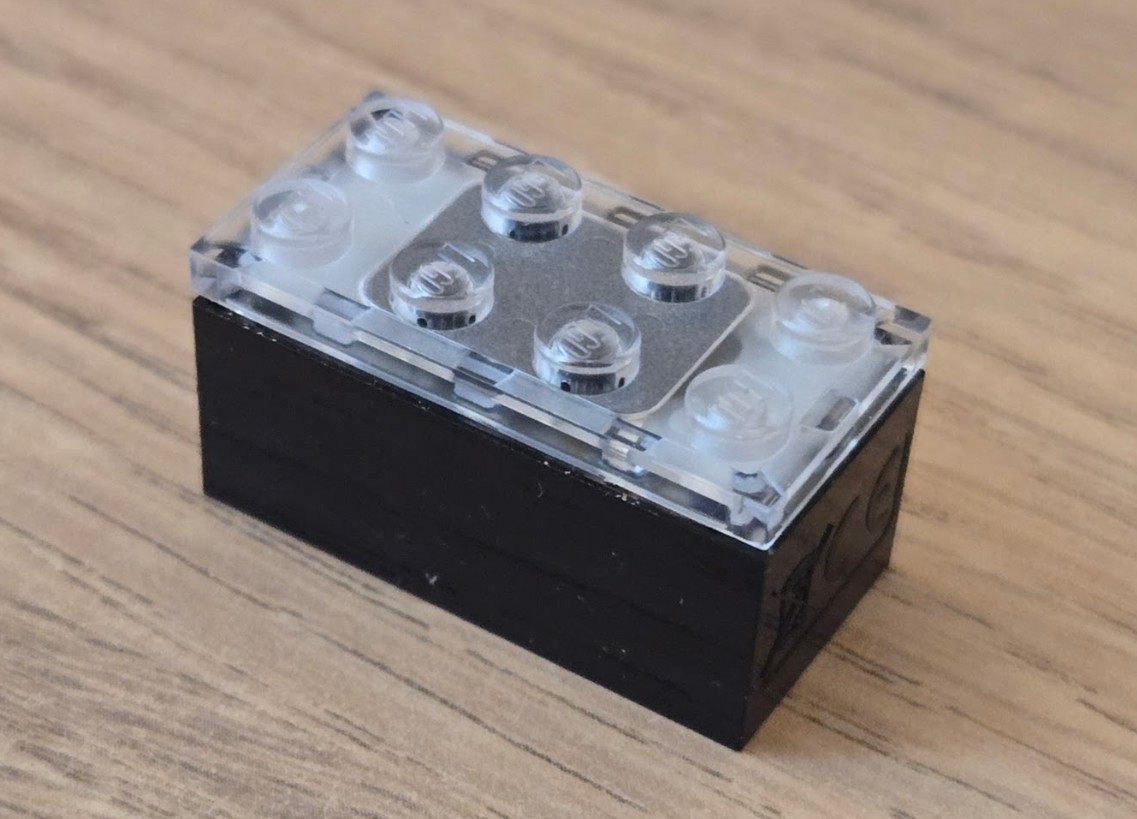
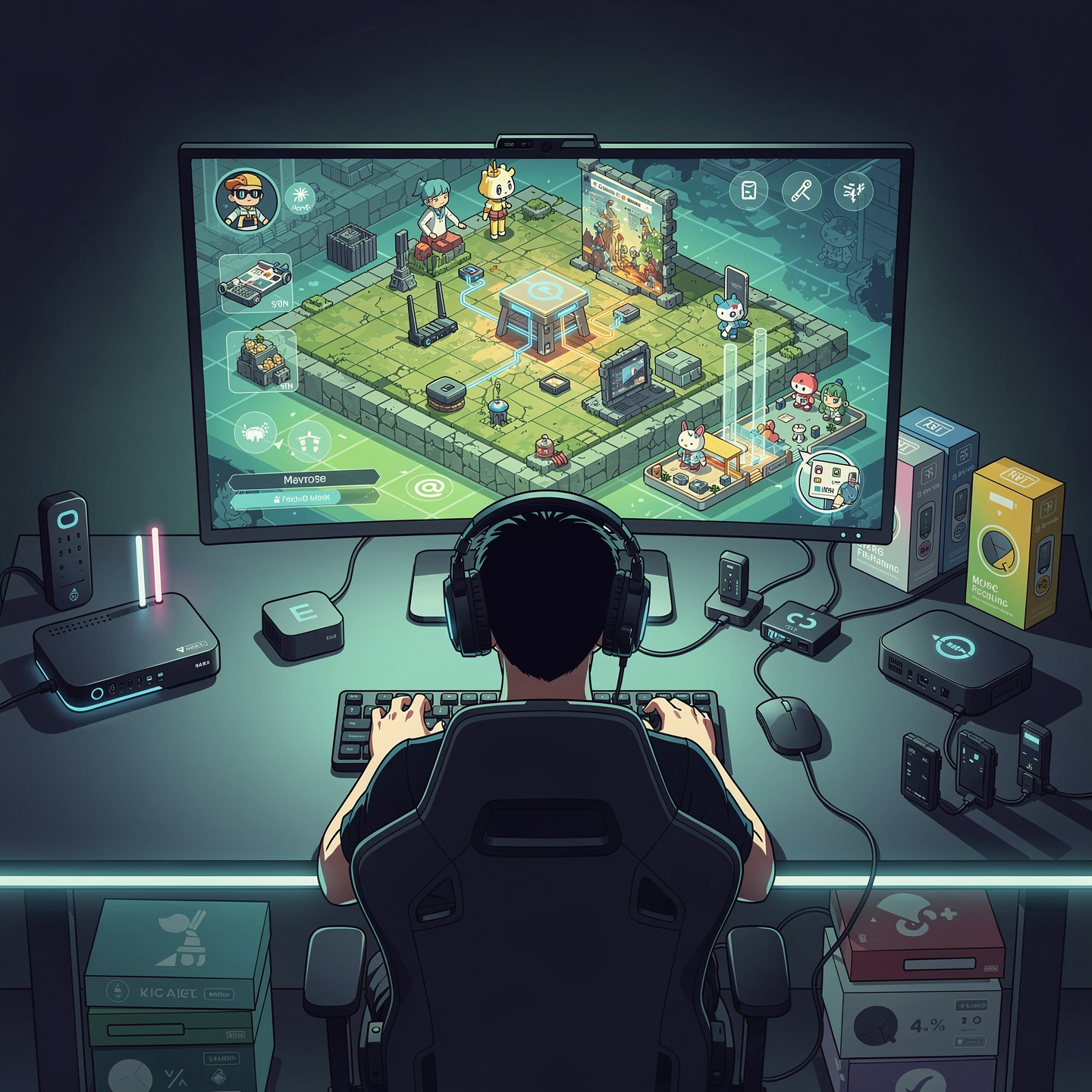
Image, voice, and video generation are now commodity infrastructure — Storytelling content can be produced on demand at near-zero cost. Phygital objects can finally carry a living media layer. LEGO SmartPlay was the early signal.
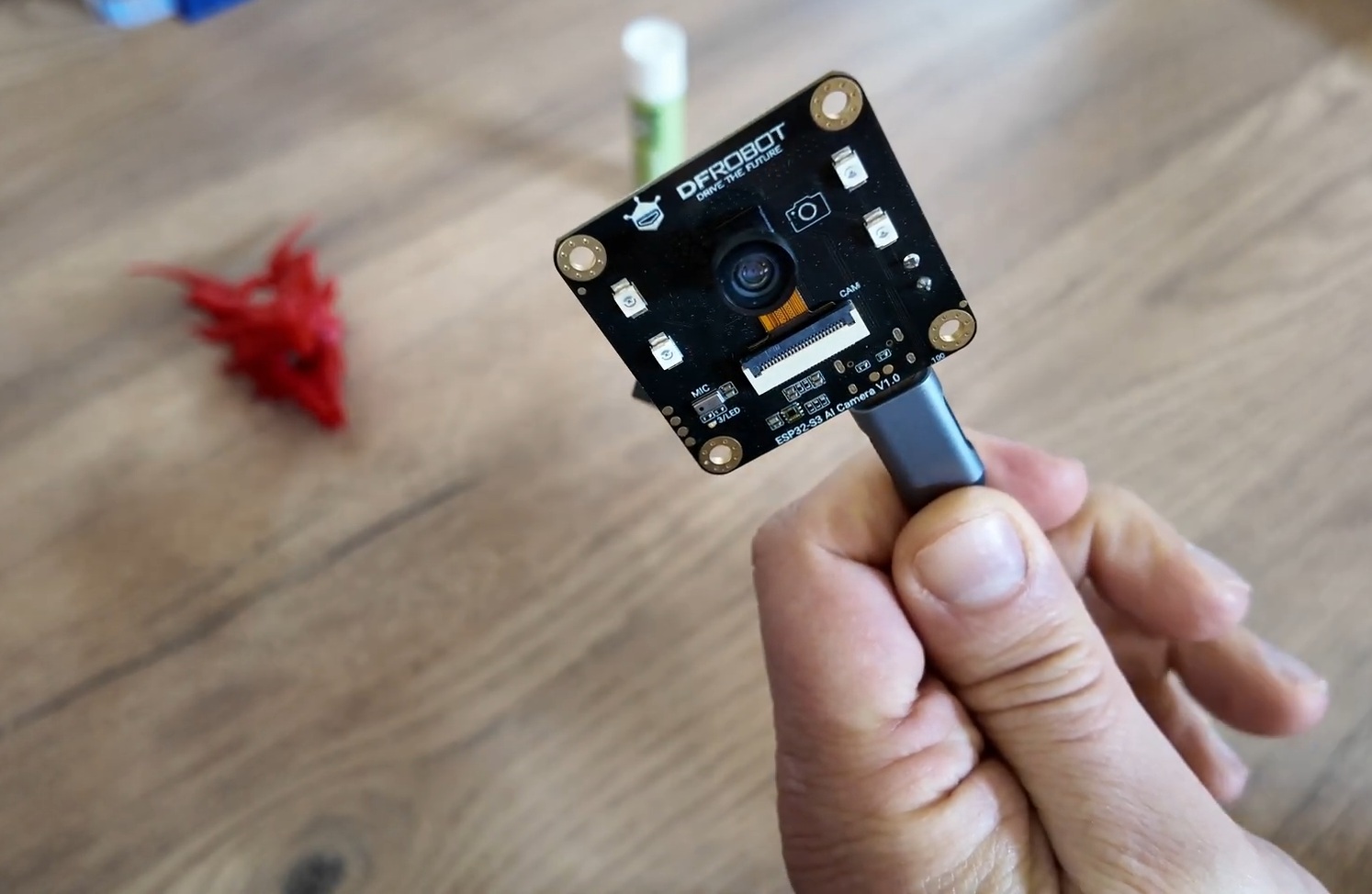
ESP32-S3 + WS2812B + reed switches: the bill of materials for a smart tile dropped under the threshold where a hobbyist can play with it and a maker can manufacture it. The hardware can now be piloted by AI in real time. Full specs →
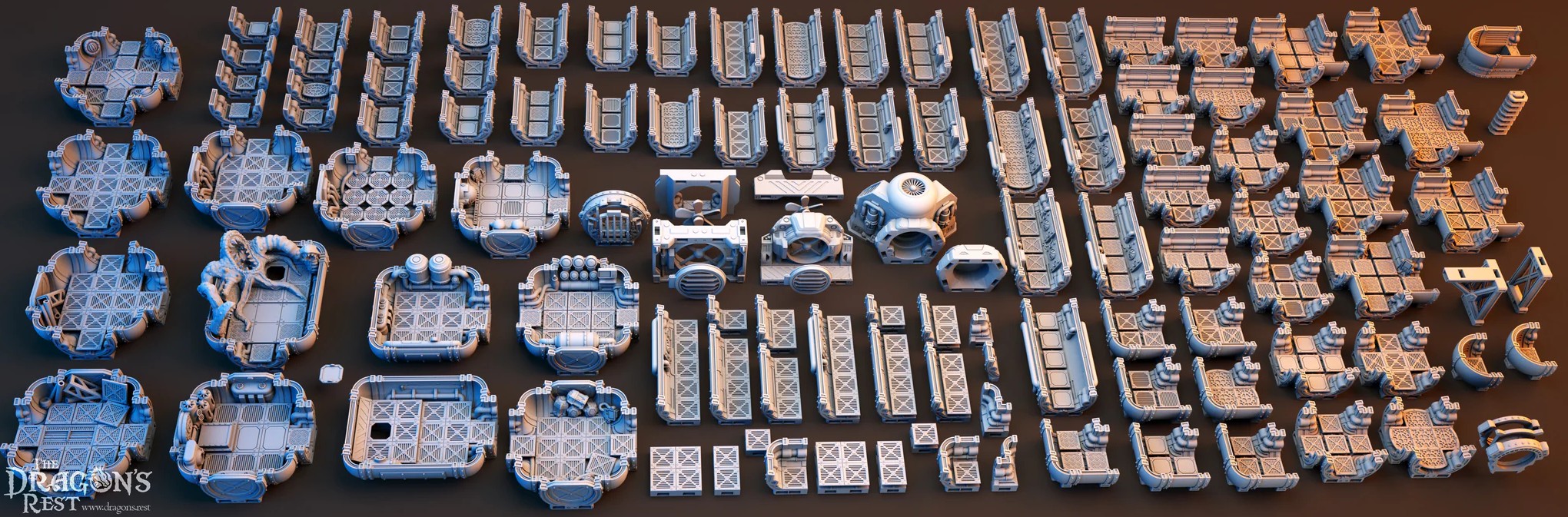
SnapMaker U1-class printers with 4-color printing are now in tens of thousands of homes. Dragon's Rest, MyMiniFactory and Patreon proved a creator economy already exists — it's waiting for the right object to rally around. Creator program →
The moment to disrupt the board game market is now. The tools exist to bring Storytelling into physical space — not as an app, not as a screen overlay, but as a living object on the table.
Chapter 3 · The Proof
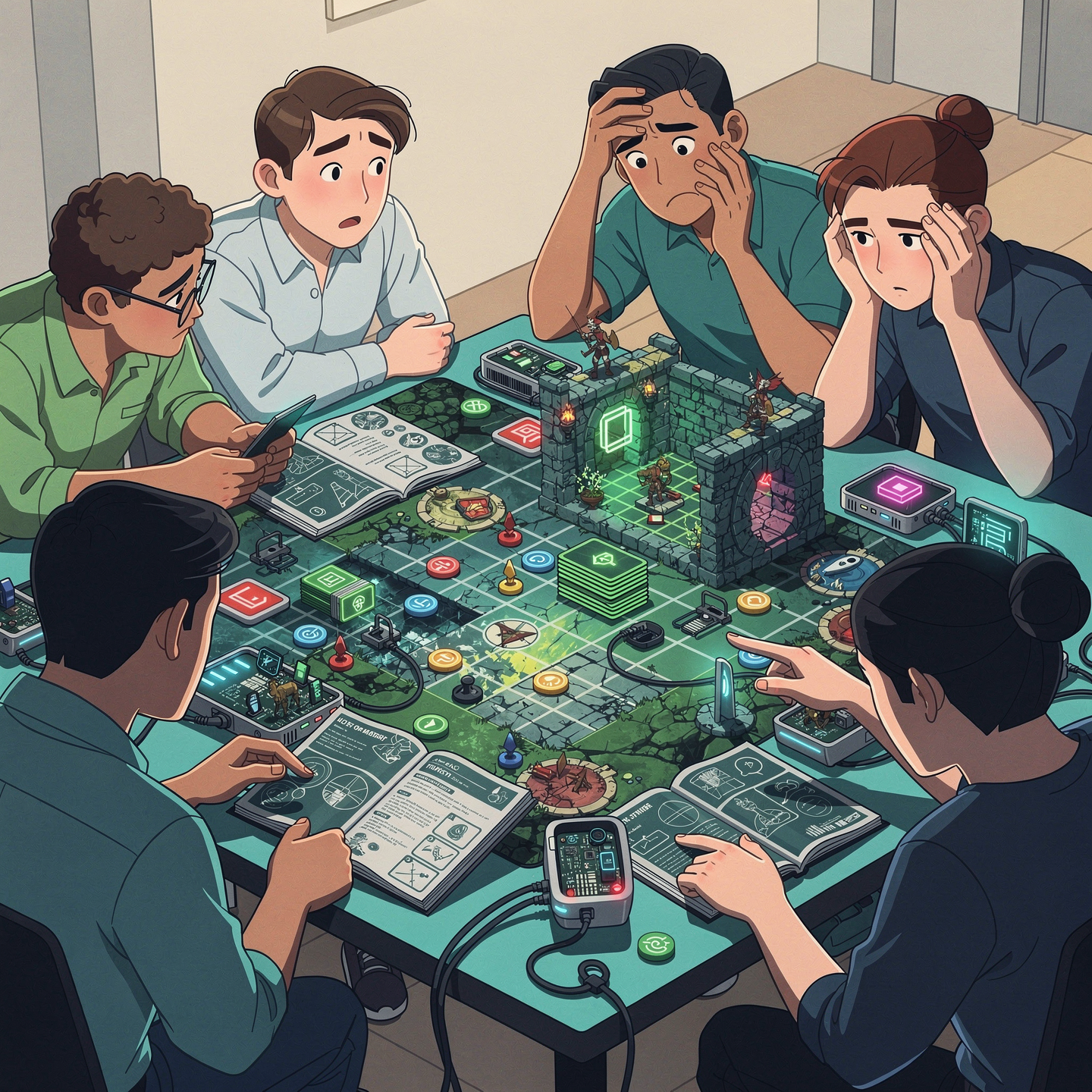
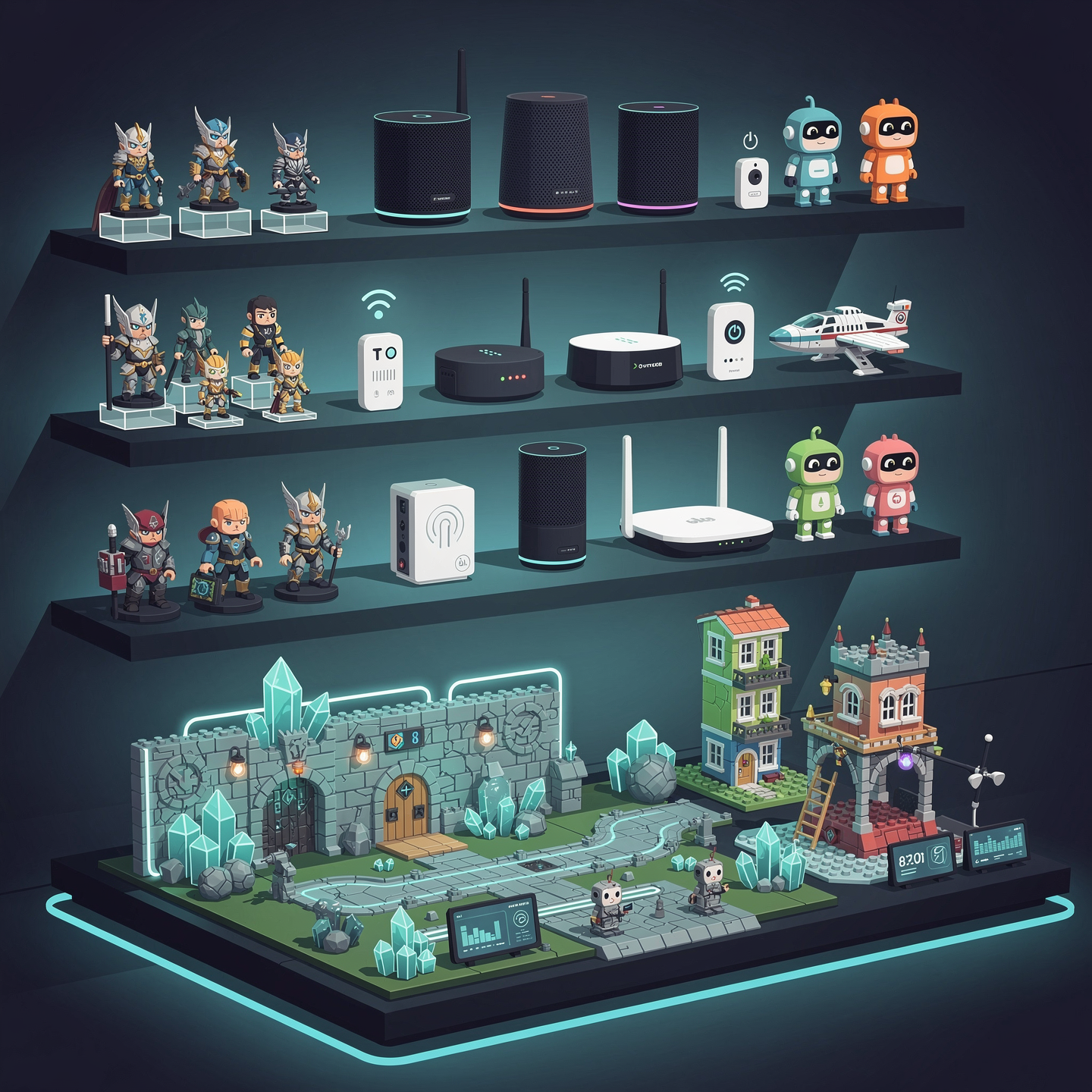
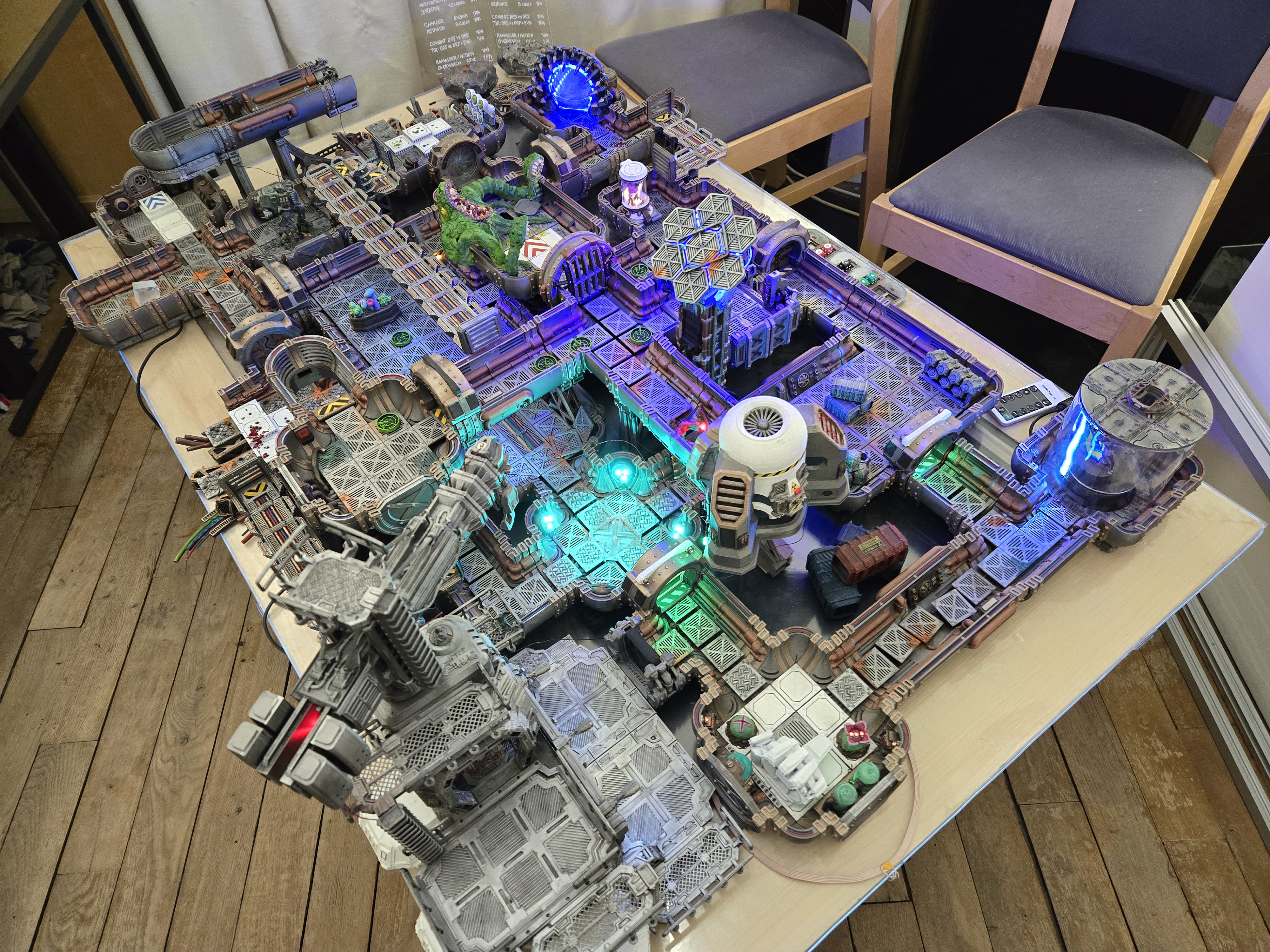
A hand-built 30-room board with modified Dragon's Rest scenery — RFID, holograms, e-ink, magnetic levitation. Painted, assembled, played. We didn't theorise the wow effect; we measured it.
People photograph it, share it, want to touch it. Confirmed across dozens of sessions.
Real 3D scenery + light + sound pulls players inside the universe in a way no screen can.
Hide the rules, dice drive the engine, hands stay on the figures.
Three Addressable Markets
Each market nails one dimension. None gives the whole experience. We're not creating demand — we're consolidating three existing demands into one object.
✓ Gameplay & narrative depth
✗ Isolation behind a screen
✗ $200B market, 5 giants, no oxygen for a newcomer
✓ Conviviality & physical interaction
✗ 90-page rulebooks, frictions
✗ ~1% of revenue for creators
✓ Craft, collection, identity
✗ Beautiful, but inert — no story
✗ £565M/year of plastic on shelves (GW alone)
Nobody asked for it. Nobody else built it. We did. People want the conviviality of the table, the depth of a video game, and the beauty of an object on a shelf — in one product.
The Gap
Every adjacent category gets one or two cells right. None has the full stack of eight.
| 1 | 2 | 3 | 4 | 5 | 6 | 7 | 8 | |
|---|---|---|---|---|---|---|---|---|
| Mansions of Madness | ~ | ✗ | ✗ | ✗ | ~ | ~ | ✗ | ~ |
| Video Games | ✗ | ✗ | ~ | ✓ | ~ | ✓ | ✗ | ✓ |
| Foundry VTT | ~ | ✗ | ✗ | ~ | ~ | ✓ | ✗ | ✓ |
| LEGO SmartPlay | ~ | ✓ | ~ | ✗ | ~ | ✓ | ~ | ✓ |
| Magic the Gathering | ✗ | ✗ | ✓ | ✗ | ✗ | ✓ | ✗ | ✓ |
| Dungeons & Dragons | ✓ | ✗ | ✗ | ~ | ✗ | ✓ | ~ | ✓ |
| Warhammer 40K | ✓ | ✓ | ~ | ✗ | ✗ | ~ | ✓ | ✓ |
| Tiny Expeditions | ✓ | ✓ | ✓ | ✓ | ✓ | ✓ | ✓ | ✓ |
Real miniatures — not tokens, not avatars.
Multi-level scenery you can touch.
Collect, trade, hunt rare pieces.
Rules, narration, generative content — no human GM.
LEDs, audio, atmosphere on the physical board.
Snap new tiles to grow the world.
The hobbyist's playground.
Active players sharing & creating.
Platform Concepts
Six ideas we're actively building into the platform. Which ones resonate with you?
Each box ships with cards — monsters, artefacts, abilities — some common, some not. Some tiles will only exist for one print run: the kind of object you recognise on a shelf years later. Hunt them across drops, trade them with other players. Secondary market built in from day one.
In Japanese folklore, 付喪神 (Tsukumogami) are objects that acquire a spirit through years of use. Your tile works the same way. Every battle stored. Every milestone — defeat a boss, survive a last stand — unlocks a new light signature or audio cue nobody else can trigger. Cosmetic only; the balance never shifts. The longer you play, the more singular your piece becomes.
Paint it, resin it, add fog machines, motorized doors. The scenario engine controls the JST ports — your circuit becomes part of the story. There's no wrong way to build on top of the PCB.
Every player owns a tile. Arrive at someone's place, snap your room next to theirs — the dungeon grows. Like the era when everyone brought their own console: same spirit, on a table. And when the adventure turns competitive, the same tiles become Kill Team-style skirmish arenas: your terrain, your rules, your turf.
Not a store. An issue. Every quarter, a themed world arrives: decor, miniatures, scenarios, cards — curated, not browsed. In the spirit of Pif Gadget's surprise insert or MyLittleParis's editorial box: you don't shop for it, you receive it. Fully compatible with everything you already own. What universe should drop next? Tell us.
The TV in the room doesn't have to sit idle. Scenario events push visuals, portraits, and ambient video to any screen on the network — a companion view for players, a broadcast layer for GMs filming their sessions. The table stays physical; the atmosphere goes wall-size.
These six ideas are in active design — not all finalized. Which ones land for you? Join the Expedition and tell us directly.
Follow the Build
Two ways to stay close — free devlog or founding crew access.
Join The Expedition